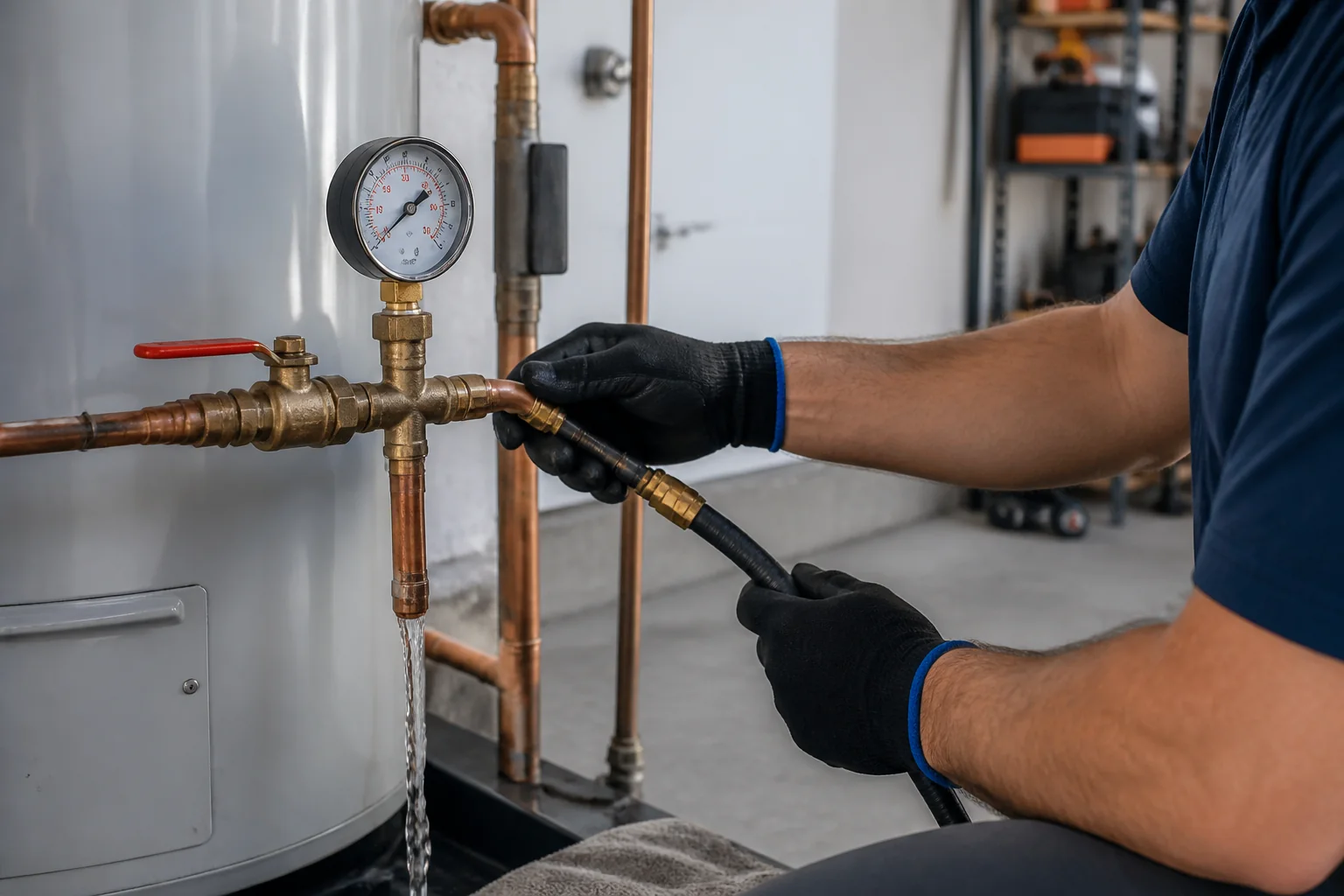
Magnolia hot water pressure repair guide
When Magnolia properties may need hot water pressure repair
Rural homes, wells and septic systems, new neighborhoods, local businesses, schools, and light commercial buildings may use propane, electric, storage, or tankless systems. In that local property mix, hot-side flow is weak at one or several fixtures while cold-water pressure remains normal can involve different equipment locations, utilities, access paths, and shutdown requirements. The request should identify the exact Magnolia building, equipment type, fuel source, model information, first symptom, and affected fixtures.
For hot water pressure repair in Magnolia, the service goal is to locate the hot-side restriction or control problem instead of treating it as a whole-property pressure issue. That outcome should be tested rather than assumed from a replaced part, and the written scope should identify any condition that shifts the recommendation toward another repair or replacement.
How hot water pressure repair is diagnosed in Magnolia
The evaluation covers heater isolation valves, heat traps, nipples, scale restrictions, mixing devices, recirculation piping, fixture supplies, and the hot-water distribution route. Well-water chemistry, long service lines, attic access, propane supply, electrical capacity, scale, and new-construction warranty status can shape the work. Those local conditions help define access and utility coordination, but measurements and visible evidence still determine the failed component and whether it lies inside the requested repair boundary.
A complete Magnolia diagnosis documents the operating history, control behavior, energy supply, leak origin, temperature pattern, pressure or flow clues, venting where applicable, and the vessel condition. It should also explain uncertainty instead of presenting an untested conclusion as fact.
Common causes of this water heater problem
Possible causes of hot water pressure repair in Magnolia include failed controls, worn heating components, ignition trouble, restricted flow, scale or sediment, pressure problems, leaking connections, venting faults, recirculation problems, utility interruptions, and internal tank or heat-exchanger damage. The exact cause must connect back to heater isolation valves, heat traps, nipples, scale restrictions, mixing devices, recirculation piping, fixture supplies, and the hot-water distribution route and the observed condition.
Repair options and replacement thresholds
The central decision is that the affected fixtures, pressure and flow measurements, pipe material, scale, valve position, and recirculation design determine the repair boundary. A repair can be appropriate when the failed part is serviceable and the larger unit remains sound. A Magnolia proposal should compare replacement when tank leakage, critical-parts availability, repeated faults, unsafe venting, utility correction, or remaining life makes the requested repair difficult to justify.
Property access and scheduling in Magnolia
FM-road travel, gates, unpaved access, precise city or county jurisdiction, and private-utility information should be provided. For hot water pressure repair, confirm the equipment location, stairs or attic opening, parking, gates, tenant or management approval, shutdown window, work-area protection, and the route for tools or replacement equipment. Commercial and multifamily systems may also require recovery planning and notice to occupants.
What affects hot water pressure repair cost in Magnolia?
Cost depends on the equipment, diagnostic time, access, drain-down, compatible parts, manufacturer support, warranty status, safety corrections, permits, shutdowns, testing, cleanup, and hidden conditions. A useful Magnolia estimate separates those items and states what evidence would change the approved price or method.
How hot water pressure repair is verified after service
The completed work should demonstrate the intended result to locate the hot-side restriction or control problem instead of treating it as a whole-property pressure issue. The Magnolia record may include stable temperature, correct control or heating operation, dry connections, safe venting, proper pressure behavior, restored circulation, cleared error history, and any unresolved permit, utility, or replacement requirement.