Describe the water heater problem
Record the property type, unit type, fuel source, timing, current function, active damage, previous work, and access.
From symptom to verified operation
A direct service process connects the observed water heater problem to testing, an agreed scope, protected work areas, and documented completion.
Record the property type, unit type, fuel source, timing, current function, active damage, previous work, and access.
Use the service catalog to separate equipment, component, safety, maintenance, distribution, and commercial repair needs.
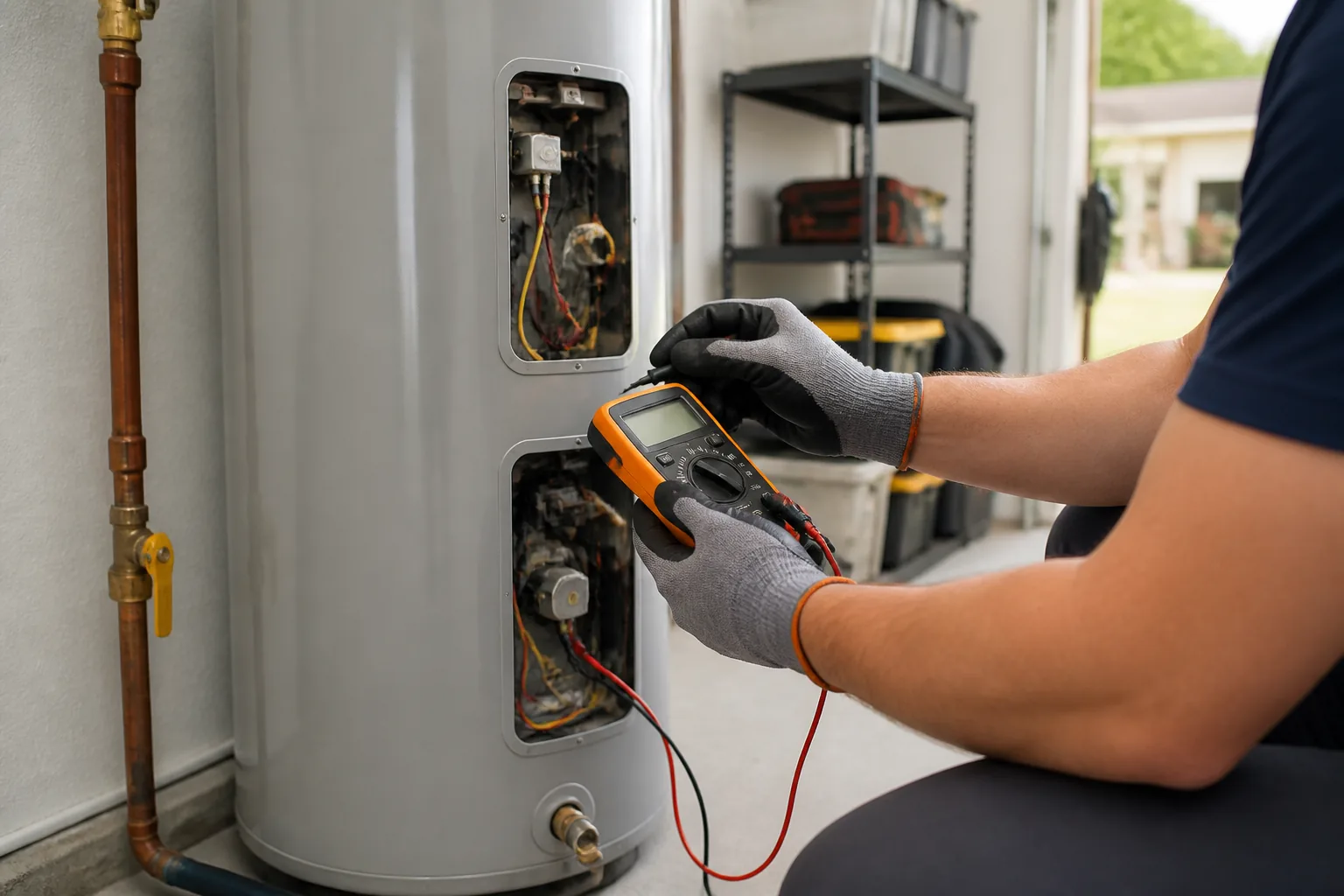
Confirm equipment condition, controls, utilities, access, safety conditions, and the actual cause before committing to a method.
Define testing, access, parts, permits, shutdowns, cleanup, completion evidence, exclusions, and replacement thresholds.
Check operation, temperature, controls, venting, pressure behavior, leak points, cleanup, and required inspection or follow-up documentation.
Frequently asked questions
What each step contributes to a clear repair decision.
Record the property type, unit type, fuel source, timing, current function, active damage, previous work, and access.
Use the service catalog to separate equipment, component, safety, maintenance, distribution, and commercial repair needs.
Confirm equipment condition, controls, utilities, access, safety conditions, and the actual cause before committing to a method.
Define testing, access, parts, permits, shutdowns, cleanup, completion evidence, exclusions, and replacement thresholds.
Check operation, temperature, controls, venting, pressure behavior, leak points, cleanup, and required inspection or follow-up documentation.
Next step
Include the equipment type, fuel source, property ZIP, timing, previous work, current damage, and access.
Request Service